Scientific Meeting on Japanese Eel and Other Relevant Eels
There is concern about the decline of Japanese eel resources, and domestic and international cooperation is being conducted for resource management. Regarding international cooperation, the “Informal Consultation on International Cooperation for Conservation and Management of Japanese Eel Stock and Other Relevant Eel Species” (hereinafter referred to as the “Informal Consultation”) has been held by Japan, China, Korea and Chinese Taipei since 2012. The Informal Consultation is held annually, and one of the major achievements so far is that, based on the “Joint Statement on the Conservation and Management of Japanese Eel and Other Related Eel Species” at the 7th Consultation in September 2014, each country and region agreed to reduce the number of Japanese eels introduced into ponds by 20% from the most recent amount at that time. In response to this joint statement, the cap on the number of Japanese eels introduced into ponds in Japan, including domestic catches and imports, was set at 21.7 tonnes and will remain in place until 2024.
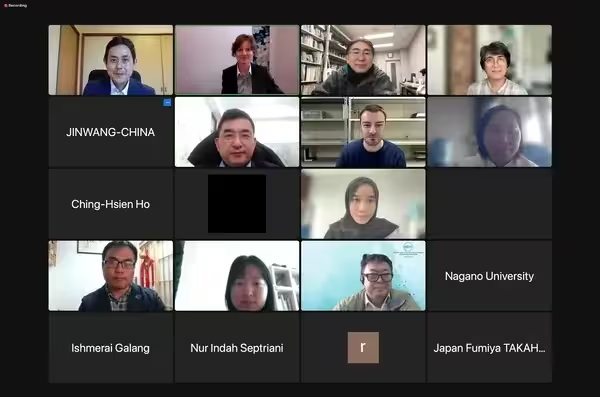
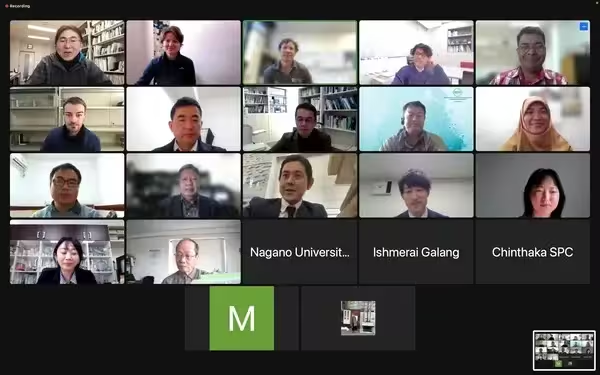
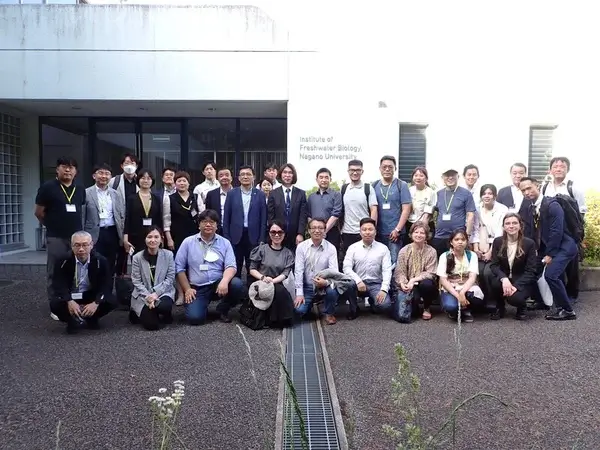
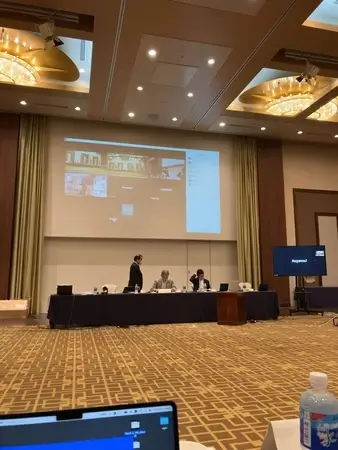
The 14th Informal Consultation also agreed to hold a series of scientific meetings in 2021, recognising the need for scientific advice in resource management. On this basis, the first eel scientific meeting was held online in April 2022, the second in Ueda City, Nagano Prefecture in May 2023 and the third in Tokyo in June 2024. The Scientific Meeting will be attended mainly by researchers from Japan, China, South Korea and Chinese Taipei, and will also invite American eel and European eel fisheries scientists as invited speakers to deepen the discussions. The photo shows researchers and government officials from the four countries and regions visiting the Institute of Freshwater Biology during an excursion for the second Scientific Meeting in Ueda City.
4th Eel Scientific Meeting Held in Hamamatsu, Japan
2025-06-16
The 4th Eel Scientific Meeting was held in Hamamatsu, Japan, on June 16-17, 2025. This international meeting, hosted by Japan, brought together researchers and government officials from Japan, China, South Korea, and Chinese Taipei to discuss the sustainable management of eel resources.
Research papers covering topics such as eel recruitment dynamics, stock assessment, and conservation measures were presented and discussed by participants from the four countries and regions. Dr. Shannan Crow from the National Institute of Water and Atmospheric Research (NIWA) in New Zealand, as an invited speaker, delivered a special talk on “Eel Recruitment Patterns at Hydroelectric Stations Across New Zealand”.
The meeting aimed to provide scientific advice on the sustainable use of eels in the context of the “Informal Consultation on International Eel Resource Conservation and Management” (Informal Consultation).
As part of this effort, participants compiled Guidelines for the Morphological Identification of Glass Eels Endemic to Asia and Oceania, a practical manual for identifying eel species based on external morphology. The guide focuses on two key diagnostic characters, the position of the dorsal fin and the pigmentation pattern on the caudal region, and is intended to support fishers and authorities in conducting rapid on-site classification of glass eels in the field. This manual contributes to improving the accuracy and consistency of recruitment monitoring across East and Southeast Asia, in support of regional eel conservation and sustainable management.
Eel Task Team
Hiroshi Hakoyama
Eel Task Team
At the first scientific meeting, opinions were exchanged and information on scientific knowledge of eels, including the Japanese eel, was shared. As a result, in order to strengthen and coordinate research activities on Japanese eel, the following terms of reference for scientific activities and joint research were agreed: (1) to establish close relationships among researchers in Northeast Asia and to collect and organize long-term time series data to understand and predict resource trends, and (2) to exchange information on technologies to clarify migration routes to spawning grounds and to analyze and evaluate route data.
Following this agreement, two task teams were established:
Task Team 1: To build close relationships among scientists in Northeast Asia and to collect and organize long-term time series data on Japanese eel in order to understand and predict stock trends in the region (Team Leader Leanne Faulks)
Task Team 2: To exchange information on tracking technologies to track the migration routes of Japanese eel and other related eels from rivers to spawning grounds in Northeast Asia and other regions, and to analyze and evaluate tracking data (Team Leader Hiroshi Hakoyama)
These task teams have just started to establish international collaboration and strengthen research activities on Japanese eel and related eels through workshops and other events. The first workshop was held online on February 13 and 17, 2023, and the second workshop was held online on April 19, 2024. As of 2025, there are 47 members (expert members, observers, liaisons, and secretariat), and researchers from a wide range of Asia-Pacific regions form teams (Japan, China, Chinese Taipei, South Korea, Thailand, the Philippines, Indonesia, Fiji, Australia, Vietnam, and New Zealand). See the Terms of Reference for Task Team 1 & 2 of Scientific Activities and Collaborative Research on Japanese Eel Established under the Scientific Meeting TOR.
 There is concern about the decline of Japanese eel resources, and domestic and international cooperation is being conducted for resource management. Regarding international cooperation, the “Informal Consultation on International Cooperation for Conservation and Management of Japanese Eel Stock and Other Relevant Eel Species” (hereinafter referred to as the “Informal Consultation”) has been held by Japan, China, Korea and Chinese Taipei since 2012. The Informal Consultation is held annually, and one of the major achievements so far is that, based on the “Joint Statement on the Conservation and Management of Japanese Eel and Other Related Eel Species” at the 7th Consultation in September 2014, each country and region agreed to reduce the number of Japanese eels introduced into ponds by 20% from the most recent amount at that time. In response to this joint statement, the cap on the number of Japanese eels introduced into ponds in Japan, including domestic catches and imports, was set at 21.7 tonnes and will remain in place until 2024.